Google

February 27, 2008

Save IKA The brave dog!

Continuouse in translation in English.


This is the Thai Dog that name is IKA.Or call in "i-ka" .

He saved his own master from the shot!

The thieve had shot to his both front legs.He was coma while sent to hospital his heart had stop but he survive.

I-KA is 14 years old.He is white.Now he rest in PET hospital mauang Angthog(อ่างทอง) that near the BKK. In this times he had to operate on by veterinary and got 9 mm. from his right front leg .

Now he needs to take care very close up until his wound be good and he can walk as usually.

I hope he be good as soon as.

Good Luck I-Ka.

ยื้อชีวิต หมาฮีโร่ ช่วยนายจนถูกยิงสาหัส หมอเผยโคม่า!

ไอ้ก๋า ฮีโร่หมาไทย ก่อวีรกรรมช่วยชีวิตเจ้านาย หลังถูกคนร้ายบุกใช้อาวุธปืนจ่อหัว กระโดดกัดมือ ถูกยิงขาหน้า 2 นัด บาดเจ็บสาหัส แพทย์เผยก่อนผ่าตัดหยุดหายใจไปแล้ว แต่ปั๊มหัวใจจนฟื้นแล้วผ่าหัวกระสุนขนาด 9 มม.ออก อาการยังน่าเป็นห่วง ต้องดูแลใกล้ชิด ตำรวจออกหมายเรียกแล้ว ประสานขอหัวกระสุนเป็นหลักฐาน


สัตวแพทย์ผ่าตัดยื้อชีวิต ไอ้ก๋า สุนัขพันทางเพศผู้อายุ 14ปีที่โดดกัดคนร้าย ช่วยชีวิตเจ้านาย


เมื่อเวลา 15.00 น. วันที่ 26 กุมภาพันธ์ ผู้สื่อข่าวได้รับแจ้งจาก พีอีที. คลินิก รักษาสัตว์ ตั้งอยู่ที่ ต.บางแก้ว เขตเทศบาลเมืองอ่างทอง ว่า มีสุนัขถูกยิงมารักษา และสัตวแพทย์กำลังช่วยเหลือชีวิตอยู่ในคลินิก หลังจากรับแจ้งจึงไปตรวจสอบ พบว่าสุนัขชื่อ ไอ้ก๋า เพศผู้ อายุ 14 ปี สีขาว พันธุ์ไทยผสม นอนให้น้ำเกลืออยู่ในกรง เตรียมทำการผ่าตัดเอาหัวกระสุนออก


จากการสอบถาม น.สพ.ดนัย สุมานิก กล่าวว่า เมื่อเช้าที่ผ่านมา นางทวี มากมี อายุ 42 ปี อยู่บ้านเลขที่ 86/6 หมู่ 6 ต.ไชยภูมิ อ.ไชโย จ.อ่างทอง นำไอ้ก๋ามาให้สัตวแพทย์ช่วยชีวิต บอกว่าไอ้ก๋ากระโดดช่วยชีวิต และกัดคนร้ายที่กำลังจะลงมือฆ่านางทวี ทำให้ถูกคนร้ายยิงได้รับบาดเจ็บ


น.สพ.ดนัย กล่าวต่อว่า สุนัขตัวนี้ถูกคนร้ายยิงที่ขาหน้าขวา 2 นัด กระสุนฝังใน คมกระสุนทำลายกระดูกจนแตกละเอียด ต้องให้น้ำเกลือและผ่าตัดเอากระสุนออก จากนั้นก็เอาเศษกระดูกที่แตกออก พร้อมกับเย็บบาดแผล และช่วยเร่งแคลเซียม เพื่อให้กระดูกประสานกันเองให้เร็วที่สุด


ด้านนางทวี กล่าวว่า ทำงานอยู่โรงงานแห่งหนึ่งใน อ.พรหมบุรี จ.สิงห์บุรี หลังเลิกงานได้ขี่รถจักรยานยนต์กลับบ้านพัก ระหว่างขับผ่านสะพานเห็นนายโต๋ ไม่ทราบนามสกุล อายุประมาณ 44 ปี ยืนทะเลาะกับวัยรุ่นอยู่ จึงจอดรถจักรยานยนต์ถามว่ามีเรื่องอะไรกัน นายโต๋กลับตะโกนสวนว่า "มึงเก่งนักหรือ" พร้อมกับคว้ามีดไล่ฟันตน จนต้องวิ่งหนีเข้าบ้าน


แต่นายโต๋ยังไม่เลิกโมโห ขับรถกระบะวีโก้ไปบ้านพร้อมคว้าปืนกลับมาบ้านของตน ระหว่างนั้นตนอยู่บ้านคนเดียว นายโต๋เอาปืนจี้ที่หัวตน บอกว่าเก่งนักก็ตายซะ ตนนั่งยกมือไหว้ขอชีวิต ทันใดนั้นไอ้ก๋า สุนัขที่เลี้ยงไว้ และอยู่ในบ้านด้วยกัน เห็นตนถูกทำร้ายก็เริ่มเห่าและกระโดดกัดนายโต๋ จนได้รับบาดเจ็บ จากนั้นนายโต๋ได้ใช้ปืนที่เตรียมมาจะยิงตน ยิงใส่ไอ้ก๋า 2 นัดซ้อน กระสุนเข้าที่บริเวณขาหน้าได้รับบาดเจ็บดังกล่าว


นางทวี กล่าวอีกว่า หลังจากนายโต๋ยิงไอ้ก๋าแล้ว ยังหันกระบอกปืนมาที่ตนอีก และทำท่าจะยิง แต่ตนร้องขอชีวิตเอาไว้ โดยบอกว่าไม่ได้เก่งกาจอะไร แค่เห็นคนทะเลาะกันก็เลยจอดรถถามดูเท่านั้น โดยขอร้องวิงวอนอยู่พักใหญ่ นายโต๋จึงยอมไว้ชีวิตและออกจากบ้านไป


"สงสารไอ้ก๋ามัน ที่ต้องมาถูกยิงแทนฉัน มันซื่อสัตย์มาตลอด วันนี้มันช่วยชีวิตฉันให้รอดพ้นอันตราย แต่มันต้องมาถูกยิงจนได้รับบาดเจ็บสาหัส หากมันตายฉันคงจะเสียใจมาก" นางทวี กล่าว


ด้าน น.สพ.ภูริทัต ยอดเพ็ชร ที่ดูแลอาการของไอ้ก๋า กล่าวว่า ก่อนผ่าตัดสุนัขหยุดหายใจไปพักหนึ่ง แต่ช่วยปั๊มหัวใจจนฟื้น จากนั้นได้ผ่าตัดเอาหัวกระสุนขนาด 9 มม.ที่ฝังอยู่ต้นขาหน้าขวาออก แต่พบว่ากระดูกแตกละเอียด ขณะนี้อาการไอ้ก๋าถือว่าน่าเป็นห่วง ต้องดูแลใกล้ชิด ให้นอนพักรักษาตัวอีกระยะหนึ่งจนกว่าแผลและกระดูกสมานกันดีขึ้น และสามารถเดินได้


นางทวี กล่าวว่า ไอ้ก๋า สุนัขพันธุ์ไทยผสมของตน เป็นที่รู้จักของเพื่อนบ้านในละแวกใกล้เคียงเป็นอย่างดีว่ามีความดุร้ายและรักเจ้าของมาก หากมีเพื่อนบ้านเข้ามาใกล้ไอ้ก๋าก็จะเฝ้าติดตามดูพฤติกรรมของผู้นั้นตลอด ไม่ยอมละสายตาจนกว่าบุคคลนั้นจะเดินออกไป บางรายก็อาจจะถูกไอ้ก๋ากัดได้รับบาดเจ็บ


พ.ต.ท.บุญชอบ อิ่มยิ้ม สว.หน.สภ.เกษไชโย กล่าวว่า ผู้เสียหายเข้าแจ้งความดำเนินคดีเรียบร้อยแล้ว ตอนนี้กำลังจะออกหมายเรียกตัวมาสอบสวน ที่สำคัญได้ประสานไปยัง พีอีที. คลินิก เพื่อขอหัวกระสุนมาเป็นหลักฐานดำเนินคดีต่อไป


From:


February 13, 2008

How can I socialize my dog so that he doesn’t develop a fear of strangers? (2)

Socializing your dog is pretty easy to do – it’s more of a general effort than a specific training regimen.
First of all, you should take him to puppy preschool. This is a generic term for a series of easy group-training classes for puppies (often performed at the vet clinic, which has the additional benefit of teaching your dog positive associations with the vet!).
In a puppy preschool class, about ten or so puppy owners get together with a qualified trainer (often there’ll be at least two trainers present – the more there are, the better, since it means you get more one-on-one time with a professional) and start teaching their puppies the basic obedience commands: sit, stay, and so on.
Even though the obedience work is very helpful and is a great way to start your puppy on the road to being a trustworthy adult dog, really the best part of puppy preschool is the play sessions: several times throughout the class, the puppies are encouraged to run around off-leash and play amongst themselves.
This is an ideal environment for them to learn good social skills: there’s a whole bunch of unfamiliar dogs present (which teaches them how to interact with strange dogs), there’s a whole bunch of unfamiliar people present (which teaches them that new faces are nothing to be afraid of), and the environment is safe and controlled (there’s at least one certified trainer present to make sure that things don’t get out of hand).

Socialization doesn’t just stop with puppy preschool, though. It’s an ongoing effort throughout the life of your puppy and dog: he needs to be taken to a whole bunch of new places and environments.
Remember not to overwhelm him: start off slow, and build up his tolerance gradually.

- Aggression towards family members -

There are two common reasons why a dog is aggressive towards members of his own human family:

- He’s trying to defend something he thinks of as his from a perceived threat (you).

This is known as resource guarding, and though it may sound innocuous, there’s actually a lot more going on here than your dog simply trying to keep his kibble to himself.
- He’s not comfortable with the treatment/handling he’s getting from you or other members of the family.

What’s resource guarding?
Resource guarding is pretty common among dogs. The term refers to overly-possessive behavior on behalf of your dog: for instance, snarling at you if you approach him when he’s eating, or giving you “the eye” (a flinty-eyed, direct stare) if you reach your hand out to take a toy away from him.

All dogs can be possessive from time to time – it’s in their natures. Sometimes they’re possessive over things with no conceivable value: inedible trash, balled up pieces of paper or tissue, old socks. More frequently, however, resource-guarding becomes an issue over items with a very real and understandable value: food and toys.

Why does it happen?
It all boils down to the issue of dominance. Let me take a moment to explain this concept: dogs are pack animals. This means that they’re used to a very structured environment: in a dog-pack, each individual animal is ranked in a hierarchy of position and power (or “dominance”) in relation to every other animal. Each animal is aware of the rank of every other animal, which means he knows specifically how to act in any given situation (whether to back down, whether to push the issue, whether to muscle in or not on somebody else’s turf, etc etc).

To your dog, the family environment is no different to the dog-pack environment. Your dog has ranked each member of the family, and has his own perception of where he ranks in that environment as well.

This is where it gets interesting: if your dog perceives himself as higher up on the social totem-pole than other family members, he’s going to get cheeky. If he’s really got an overinflated sense of his own importance, he’ll start to act aggressively.

Why? Because dominance and aggression are the exclusive rights of a superior-ranked animal. No underdog would ever show aggression or act dominantly to a higher-ranked animal (the consequences would be dire, and he knows it!)

Resource guarding is a classic example of dominant behavior: only a higher-ranked dog (a “dominant” dog) would act aggressively in defence of resources.
To put it plainly: if it was clear to your dog that he is not, in fact, the leader of the family, he’d never even dream of trying to prevent you from taking his food or toys – because a lower-ranking dog (him) will always go along with what the higher-ranking dogs (you and your family) say.

So what can I do about it? The best treatment for dominant, aggressive behavior is consistent, frequent obedience work, which will underline your authority over your dog. Just two fifteen-minute sessions a day will make it perfectly clear to your dog that you’re the boss, and that it pays to do what you say.

So what can I do about it? The best treatment for dominant, aggressive behavior is consistent, frequent obedience work, which will underline your authority over your dog. Just two fifteen-minute sessions a day will make it perfectly clear to your dog that you’re the boss, and that it pays to do what you say.

- If you’re not entirely confident doing this yourself, you may wish to consider enlisting the assistance of a qualified dog-trainer.

- Brush up on your understanding of canine psychology and communication, so that you understand what he’s trying to say – this will help you to nip any dominant behaviors in the bud, and to communicate your own authority more effectively

- Train regularly: keep obedience sessions short and productive (no more than fifteen minutes – maybe two or three of these per day).

Why doesn’t my dog like to be handled?
All dogs have different handling thresholds. Some dogs like lots of cuddles, and are perfectly content to be hugged, kissed, and have arms slung over their shoulders (this is the ultimate “I’m the boss” gesture to a dog, which is why a lot of them won’t tolerate it.) Others – usually the ones not accustomed to a great deal of physical contact from a very young age – aren’t comfortable with too much full-body contact and will get nervy and agitated if someone persists in trying to hug them.

Another common cause of handling-induced aggression is a bad grooming experience: nail-clipping and bathing are the two common culprits.
When you clip a dog’s nails, it’s very easy to “quick” him – that is, cut the blood vessel that runs inside the nail. This is extremely painful to a dog, and is a sure-fire way to cause a long-lasting aversion to those clippers.

Being washed is something that a great many dogs have difficulty dealing with – a lot of owners, when confronted with a wild-eyed, half-washed, upset dog, feel that in order to complete the wash they have to forcibly restrain him. This only adds to the dog’s sense of panic, and reinforces his impression of a wash as something to be avoided at all costs – if necessary, to defend himself from it with a display of teeth and hackles.

Can I “retrain” him to enjoy being handled and groomed?

n a word: yes. It’s a lot easier if you start from a young age – handle your puppy a lot, get him used to being touched and rubbed all over. Young dogs generally enjoy being handled – it’s only older ones who haven’t had a lot of physical contact throughout their lives that sometimes find physical affection difficult to accept.

Practice picking up his paws and touching them with the clipper; practice taking him into the bath (or outside, under the faucet – whatever works for you, but warm water is much more pleasant for a dog than a freezing spray of ice-water!), and augment the process throughout with lots of praise and the occasional small treat.

For an older dog that may already have had several unpleasant handling/grooming experiences, things are a little more difficult. You need to undo the damage already caused by those bad experiences, which you can do by taking things very slowly – with an emphasis on keeping your dog calm.

The instant he starts to show signs of stress, stop immediately and let him relax. Try to make the whole thing into a game: give him lots of praise, pats, and treats.

Take things slowly. Don’t push it too far: if you get nervous, stop.

Dogs show aggression for a reason: they’re warning you to back off, or else! If your dog just can’t seem to accept being groomed, no matter how much practice you put in, it’s best to hand the job over to the professionals.

Your vet will clip his nails for you (make sure you tell him first that he gets aggressive when the clippers come out, so your vet can take the necessary precautions!). As far as washing and brushing goes, the dog-grooming business is a flourishing industry: for a small fee, you can get your dog washed, clipped, brushed, and whatever else you require by experienced professionals (again, make sure you tell them about your dog’s reaction to the experience first!)
For more information on handling aggressive and dominant behaviors, as well as a great deal of detailed information on a host of other common dog behavior problems, check out SitStayFetch.

It’s a complete owner’s guide to owning, rearing, and training your dog, and it deals with all aspects of dog ownership.

To get the inside word on preventing and dealing with problem behaviors like aggression and dominance in your dog, SitStayFetch is well worth a look.

Recognizing, preventing, and handling dog aggression

A dog is an instinctively aggressive creature. In the wild, aggression came in very handy: dogs needed aggression to hunt, to defend themselves from other creatures, and to defend resources such as food, a place to sleep, and a mate. Selective breeding over the centuries has minimized and refined this trait significantly, but there’s just no getting around it: dogs are physically capable of inflicting serious harm (just look at those teeth!) because that’s how they’ve survived and evolved. And Mother Nature is pretty wily – it’s hard to counteract the power of instinct!
But that doesn’t mean that we, as dog lovers and owners, are entirely helpless when it comes to handling our dogs. There’s a lot that we can do to prevent aggression from rearing its ugly head in the first place – and even if prevention hasn’t been possible (for whatever reason), there are still steps that we can take to recognize and deal with it efficiently.
- Different aggression types -
There are several different types of canine aggression. The two most common ones are:
- Aggression towards strangers
- Aggression towards family members
You may be wondering why we’re bothering categorizing this stuff: after all, aggression is aggression, and we want to turf it out NOW, not waste time with the details – right?
Well … not quite. These two different types of aggression stem from very different causes, and require different types of treatment.
- Aggression towards strangers -
What is it?
t’s pretty easy to tell when a dog’s nervy around strange people. He’s jumpy and on the alert: either he can’t sit still and is constantly fidgeting, leaping at the smallest sound, and pacing around barking and whining; or he’s veerrrry still indeed, sitting rock-steady in one place, staring hard at the object of his suspicions (a visitor, the mailman, someone approaching him on the street while he’s tied up outside a store.)
Why does it happen?
There’s one major reason why a dog doesn’t like strange people: he’s never had the chance to get used to them. Remember, your dog relies 100% on you to broaden his horizons for him: without being taken on lots of outings to see the world and realize for himself, through consistent and positive experiences, that the unknown doesn’t necessarily equal bad news for him, how can he realistically be expected to relax in an unfamiliar situation?
What can I do about it?
The process of accustoming your dog to the world and all the strange people (and animals) that it contains is called socialization. This is an incredibly important aspect of your dog’s upbringing: in fact, it’s pretty hard to overemphasize just how important it is. Socializing your dog means exposing him from a young age (generally speaking, as soon as he’s had his vaccinations) to a wide variety of new experiences, new people, and new animals.
How does socialization prevent stranger aggression?
When you socialize your dog, you’re getting him to learn through experience that new sights and sounds are fun, not scary.
It’s not enough to expose an adult dog to a crowd of unfamiliar people and tell him to “Settle down, Roxy, it’s OK” – he has to learn that it’s OK for himself. And he needs to do it from puppyhood for the lesson to sink in.
The more types of people and animals he meets (babies, toddlers, teenagers, old people, men, women, people wearing uniforms, people wearing motorcycle helmets, people carrying umbrellas, etc) in a fun and relaxed context, the more at ease and happy – and safe around strangers
- he’ll be in general.
contineous
See you the next time in these story in the topic :
How can I socialize my dog so that he doesn’t develop a fear of strangers?

February 5, 2008

Dog Dental Problems

To ensure your dog's dental health, they require dental care on a regular basis. Otherwise they may develop problems.

Dog dental problems may also result from injury, foreign bodies such as porcupine quills or foxtail, malnutrition or systemic diseases which infect the mouth as well as other parts of the body.


Occasionally a puppy or kitten will retain some deciduous (baby) teeth after the permanent teeth have appeared. This may damage the soft tissues of the mouth and may even accelerate wear of permanent teeth. A veterinarian should be consulted to determine whether or not removal is necessary.

From : http://petcaretips.net/dog_dental_care.html

Everything You Need To Know About....


Dogs have 28 deciduous teeth (temporary) and 42 permanent teeth. Deciduous or "milk" teeth begin to appear when a puppy is about four weeks of age, and are lost gradually between 14 and 30 weeks of age. During this time, puppies may eat slightly less and chew more. Hard rubber or rawhide toys made especially for dogs are a good investment to help prevent household damage during this time.


Common signs of dental problems in dogs include:


  • Loss of appetite

  • Red, swollen and bleeding gums

  • Drooling

  • Blood in the saliva

  • Yellow-brown tartar at the gum line

  • Broken teeth

  • Foul breath

Dogs sometimes suffer from broken teeth, often a result of biting on sticks or rocks. A cracked or broken tooth can be painful if the nerve tissue is exposed; if it becomes infected, there is the danger of the infection spreading through the bloodstream. Prompt veterinary attention is recommended.


Taking Care Of Your Dog's Teeth And Gums


by: Jack Russell

Clean teeth and gums are very important of the overall health of your dog. Here are some information on the most common dental problems of dogs and ways in treating them.


Dog's common dental problems


- Periodontitis


It is very common among dogs to have gum disease. At the age of two or three, many dogs have either periodontitis or gingivitis.


The most common dental problem for canines is periodontitis, also known as periodontal disease. The disease is caused by various factors: plaque, food debris, cell mucus, and a mixture of bacteria. This results to a film characterized by milky-white on the dog's teeth as well as the gums. When this film gets combined with saliva, the plaque it causes becomes tartar, and very hard to remove.


- Gingivitis


Gingivitis, also known as gum disease, happens when gum tissue suffers from an inflammation. Without treatment, it can lead to periodontitis, teeth loosening, bone less, and ultimately, loss of teeth.


- Tooth fractures


Tooth fractures occur when dogs chew hard substances, such as hard rocks and cow hooves. The fractures result to infection inside the broken tooth, which is known as the endodontic disease.


How to prevent dental problems


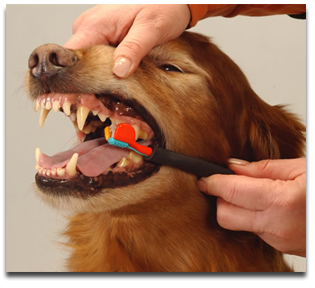
Your dog can fight off these dental problems by removing the plaque before it actually develops as tartar. How to do it? The most effective way is by brushing the teeth of your dog in a mechanical fashion. The brushing would reduce much of the bacteria presence in the mouth, not to mention making your dog's breath smell sweeter. Make it a habit of brushing your teeth on a daily basis.


Toothpaste. There are toothpaste products made especially for dogs. Brush your pet's teeth using dog toothpaste. Human toothpaste is specifically designed for humans to spit the paste washings out. Dogs cannot do that, so pick a dog toothpaste that is safe enough for dogs to swallow.


Toothbrush. Using a toothbrush in its teeth would take some time for the dog to get used to. Let your dog be acquainted and get used to this is by putting some garlic salt, mix the salt with water, and dip the solution in an old toothbrush. Hold the old brush, and let your pet taste and chew it. Your dog will start to realize that chewing a toothbrush is and tastes good. Make it a habit a few times, until it feels comfortable brushing with it.


Finger brush. You could also use a finger brush instead of a toothbrush. A finger brush is a good alternative, although nothing could replace the good ol' toothbrush. The finger brush just fits onto one's fingertip and can let you brush the dog's teeth without the dog knowing it. Well, at least almost. The disadvantage of getting a finger brush to clean your dog's teeth is that its bristles are quite large for the brush to go under the gumline's margin as effectively compared with regular toothbrush.


Professional cleaning. If you don't want to do the cleaning by yourself, you could take your dog to a veterinarian and have its teeth professionally cleaned. A good veterinarian will take additional measures in ensuring your dog's clean teeth by anesthetizing your dog, scraping the buildup of plaque from all over the gumline areas, and polishing the teeth for a sparkling finish.


Home checkup. Try to make it a regular habit of checking the teeth of your dog for any cracked or broken teeth. If you see some problematic teeth, check promptly with the veterinarian.


Home safety. Of course, cleaning your dog's teeth does not mean you should disregard other areas of concern. Tough substances, such as bones, rocks, hard nylon, or cow hooves should be removed from areas where your dog could see. Buy your dog chewing toys that are safer like rubber-made toys. You could also provide bones that are soft enough for your dog to chew.


Mouthwash. There are some products in the market that deal very well in helping to kill the bacteria in your dog's mouth and could actually help heal damaged gum tissues. Do not forget to ask your veterinarian on the best products in the market.


Dental problems do not only happen to humans. Dogs also have dental issues as well. It is up to the owners on how to help their pet dogs overcome their dental problems.


This article was posted on December 06, 2005

February 4, 2008

Understanding Dog Behavior

Understanding Dog Behavior
by: David Beart

Dogs are considered the most genuinely happy creatures on earth. Their entire day is filled with you whether you are there or not. They are waiting for you, sleeping on your bed, watching for you out the window, wondering where you are while they are patiently waiting for you in their crate.

Once you come home it’s all about you. Your attention, your love, your food, your commands, and of course, your time. For an animal that revolves his whole life around you, it can be confusing why he does some of the things he does. If he loves you so much, why is he destroying your shoes? If you are the light in his life, why is he ignoring you when you come home?

Dogs have a very unique way of expressing themselves. Most people believe that dogs have and show genuine emotion such as love and fear and even anger. We understand that when they sit at the door and bark they are telling us they need to go outside. We understand that when we have a leash in our hand and they get a little goofy that they are excited about the upcoming walk. Understanding their more subtle or destructive cues takes a little insight into your dog’s world.

Returning Home Behavior

Some dogs get so excited that you are home after a weekend away they completely get beside themselves with joy. They follow you around and may even be uncharacteristically clingy as you wander about the house. Others get so excited when you first walk in the door, and then leave you in complete peace for several hours. People usually say that he is angry with you for leaving in the first place.

Most experts say their behavior is more about security than anything. You are your dog’s entire world and when for some reason you disappear for a long period of time, and there is a sudden change in his routine, his security is thrown a bit. He is very happy to see you but he also needs a little reassurance that everything is getting back to normal. Some dogs do this by following you around the house until they are sure, and others do this from a more observatory stance. Either way your canine family member is just looking for reassurance and his typical routine to return.

The Canine Garbage Disposal

He knows better and he knows that you know he knows better. However, every chance he gets you see him scampering off with something that you just absolutely don’t want him to chew. He eats your best shoes while you’re in the shower, the corner of the bedspread while you’re getting dressed, and the phone cord while you were talking on it. And you haven’t even made it to breakfast yet. As much as you love him you are contemplating the moral issues of drop kicking him right out the door. You’ve tried everything that you can think of and yet he is still eating everything in sight. He is beyond the age where teething causes chewing but yet he still can’t seem to find his own toys to consume.

There are two key factors in a garbage disposal dog. The first and easiest to solve is a health problem relating to his teeth and gums. If his mouth is bothering him, he is going to chew on everything he can. Start with a vet visit to rule out any periodontal issues.

The more likely culprit of his unflattering behavior is stress and anxiety. Yes, your happy go lucky guy can suffer from stress. Has there been a change in the household such as a new baby, dramatically increased arguing or is someone who is supposed to be there suddenly gone?

For starter, confine him when you can’t watch him, although preferably with you. A puppy gate here can go a long way in simple things like keeping an eye on him while you are showering and watching his every move while you are getting dressed. Often the hurried morning is a higher anxiety period for your dog.

Then begin to address the problem. Make sure there’s an appropriate toy available to him at all times and make a big deal about it when he eats the right things. A sharp reprimand and a quick and immediate discipline is in order when you catch him at the wrong chew toys. You don’t want to stress him more by smacking him, although a rolled up newspaper banged on a hard surface is a quick attention getter. Never strike him with it. He will make it his mission to eat it if you do in an effort to eliminate an already stressful period.

Try to identify the stressor and relax him around the problem. If you can get him comfortable enough around the new baby to lie down even when the baby is crying, you have made strides. If there is tension in the house try to tone down the arguing, or take it to an alternative room. If your dog can be comfortably confined to an outdoor yard, that is the best option, but don’t get so wrapped up in your arguing that you leave him out there for extensive periods of time. Whatever the stressor is that is causing the chewing, try to get him comfortable and relaxed around it. This may take some time, but relieving his anxiety will also reduce the tension in your life as well.

Aggression

You know him as your sweet and loveable friend. Your friends and neighbors know him as the terror on your doorstep who wants to eat them. Aggression is not a nice quality in your dog. Aggression comes from the desire to protect, and anything perceived as a threat is going to be treated like one. For some dogs this means anyone and anything that doesn’t belong. He is only trying to defend his home and his human family, but aggression is a serious behavioral problem that needs to be nipped in the bud.

Check your own behavior. How are you reacting to him when he is growling and carrying on at the neighbor as she walks by your house? Make sure the words “good boy” are the last thing your dog hears. “Be a good boy,” or “That’s not a good boy,” are not deterrents. Neither is “Shh.”

Mild mannered people tend to have more aggressive dogs because their tones are not consistent with command. If your dog doesn’t believe you enough to listen to you, he certainly isn’t going to believe you can take care of yourself. I can’t tell you how many times our pups have been accosted on the street with an owner telling their dog that it’s ok. It’s not okay. The words you are looking for are firm and sharp and sound like “Sit” and “No.” One word firm commands are much more effective than reasoning. Aggression is a serious offense and it must be treated as one. We have one dog who got a little out of control. When sitting wasn’t getting him under control on his nightly walk we actually went to making him lie down. Right there on the street or sidewalk we commanded our German Shepard to lie down to get his attention and then added a “Quiet” command to get our point across. His aggression quieted down in a week.

Some dogs do better if they can at least see what’s going on even if they can’t be a part of the process. Aggressive dogs are really protective dogs. The delivery man might not want your growling, snarling beloved pet to join you on the porch, but he might do better if he has a place he can be directed to sit and watch provided he stays quiet. Constantly sequestering him does nothing to solve the problem.

The Overbearing Overgrown Puppy

He is happy to see you. You are his toy and his best friend and he will pummel you over in an attempt to play with you. He has run over the children and covered the cat with his doggie saliva. You love him, but wow does his energy get annoying sometimes. It’s hard to talk to someone one the phone when he’s jumping on you and wrapping his big paws around you and forget leaving the house looking presentable.

He is the puppy who never grew up. His body got big, but he seems intellectually stuck at four months old. Most of the time this behavior is a matter of dominance. When a dog views you as his alpha leader, he gives you respect. When you are his peer, you are his play mate. Alpha leaders are by nature a food related dominance. Of course other factors play into it as well, but to a dog food is leadership. If you are not already the dog’s food source, consider taking on that responsibility.

Establish yourself as a leader. This isn’t all that hard to do and you don’t even have to stop playing with him in order to do it. Start by giving him random commands, especially around feeding time. With his food in your hand tell him to sit. With the food in the bowl and the bowl on the floor tell him to wait, and then make sure he follows through. When he has looked to you for permission, allow him to commence eating.

Slowly add random commands throughout the day and rebuke rough playing immediately. If he wants to play, he has to sit and wait for things rather than tackle you. You can just as easily give him commands with playtime as you can any other time. A few commands before you throw the ball is usually enough to get the right message across as you are establishing dominance.

Interpreting Your Dog

Understanding your dog’s behavior isn’t quite as mystifying as it seems. He really is doing his best to tell you. Watching his communication with other people and animals in the household can really open your eyes to how he expresses himself.

A dog wags his tail to express happiness, yawns when he is content, and growls when he is threatened. With over one hundred facial expressions, he is constantly telling you something. The more you get to know your dog the more you will learn what he is telling you.

Owning a dog is a wonderfully joyous experience. They bring so much into our world which is why so many people have them. They look to us to tend to their needs. We owe it to them to give them at least our very best shot at keeping them safe, healthy, and happy.

From : http://www.articlecity.com/articles/pets_and_animals/article_1379.shtml


Home Remedies for Fleas

Home Remedies for Fleas
by: Mike Campbell

Many people treat their pets as family, and justly so. Well, when one of your children, or another family member has a rash or infection you take care of it as quickly as possible. Pets also deserve the same quick attention to keep them healthy. Instead of a huge vet bill, why not try an herbal remedy when your pet gets attacked by fleas. here are a few home remedy suggestions you can try.
Give An Herb Bath
At the first sign of a flea, bathe your pet with a natural pet shampoo that contains flea-repellent herbs. Pennyroyal or eucalyptus oil boost the bathwater's flea killing power. A badly infested dog needs a bath about every two weeks; a cat, about once a month.
Clean, Clean, and Clean Some More
Especially in the Summer, wash the pets bedding in hot soapy water once a week, and dry it in a hot dryer. Also vacuum your rugs every two to three days. Ninty percent of fleas are found where your pet sleeps.
Use Natural Powders
They generally contain such herbs as rosemary, rue, wormwood, pennyroyal, eucalyptus, or citronella, and sometimes tobacco powder. You can also dust the powder, or just diatomaceous earth, in all the nooks and crannyies you can't reach by vacuuming.
Diatomaceous earth is a great home remedy that removes the fleas waxy coating and dries them out, which kills them. Caution: Wear a dust mask to avoid the easily inhaled, finely ground diatomaceous earth used in swimming pool filteres; and pennyroyal and tobacco powder in large quantities can be toxic to you and your pets.
Attack Internally
Finally, add garlic and brewer's yeast to your pet's diet. Even try rubbing the yeast into your pet's fur. Both ingredients are said to make a flea's taste buds curl in disgust. There's no scientific proof, but some pet owners swear by this home remedy.
Preventitive care goes a long way with pets. Obviously they can't talk to you and let you know that they are beginning to host fleas, so be aware of your pet's behaviour and try these herbal remedies at the first sign.

10 Reasons Why Pet Insurance Is A Must by: Timothy Rudon

10 Reasons Why Pet Insurance Is A Must by: Timothy Rudon

Pets today need insurance as the cost of medical treatments are very high and in breeding and other problems have made pets more susceptible to diseases and other problems. Pet insurance can cost anywhere between USD 2000-6000 over the life of a pet and the amount of premium to be paid would depend on many variables like breed, age, and more. Pet insurance can be bought online or offline from leaders like: Pet care Insurance Companies; Veterinary Pet Insurance Company; Pets Best Insurance; and Vet Insurance. The best way to insure a pet is to ask your vet for advice. Pet insurance at affordable rates can be purchased online from websites devoted to pet insurance and pet care. The premium to be paid depends on age of pet, general health of pet, breed of pet, potential risks for susceptible diseases and so on. Before investing in insurance you must do your homework and find out all you can about polices, how to keep premiums low, and how to buy the best pet insurance at the most affordable rate. The internet is a knowledge highway and has great information on pets, insurance options, and more. Make the effort to educate yourself. Medical treatment can cost thousands of dollars. And treatments for hip diseases, cancers, kidney failure and more can cost between USD 1000- 5000. In case of disease or accidents pets can be treated and nursed back to health instead of “put down.” Here are a few reasons why pet insurance is to be considered: 1. A pet is a family member and death due to accident or illness can upset children. Insurance coverage could save the life of the pet. 2. Pet insurance gives peace of mind and owners can stop worrying about unpaid bills or pets crossing roads. 3. Pet insurance ensures longer life spans of pets. 4. Insurance offers preventive health care, which means diseases can be detected in pets at early stages when treatments can offer cures. 5. Pet insurance covers expensive diagnostics and hospitalization expenses for pets. 6. Pet insurance can save the life of the pet as it covers treatments like radiation therapy and kidney replacements. 7. Pet insurance releases the burden of having to pay when the family is going through lean times such as being “laid off” or having a personal illness to deal with. 8. Pet insurance can help you get a deductible which is cost saving and the insurance will protect the pet. 9. Pet insurance offers regular health checks, shots, elective and non elective surgeries, and sometimes extended stays at a pet boarding house. 10. In general pet insurance can cost as little as USD 20-40 a month and this brings good health and cheer to the pet, very much a family member. Pet insurance could save the life of a dear one without straining your wallet.

Dog flea treatment: Dog flea treatment

Before you begin with dog flea treatment on your dog, you have to first treat your house. Begin by thoroughly scouring the areas where your dog sleeps and where he usually goes to relax.

Wash all the bedding and then place it in a hot dryer. The next step in dog flea treatment is to vacuum every surface possible. This includes all furniture, rugs, carpets, and drapes. Another important part of the dog flea treatment is to wax the floor. This step of the dog flea treatment increases the chance of killing stray fleas as well as their eggs.

You may also hire an exterminator to take are of the dog flea treatment that you will need. They offer a welcome relief if your own efforts of treatment are ineffective or if you just do not have the time to do it. Dog flea treatment usually takes two sessions to completely eradicate the fleas.

The first dog flea treatment is usually done in the spring while the second dog flea treatment will usually be done in the mid summer. Also, it is ideal to have a dog flea treatment done about once a month if you live in a warm and humid climate.

After you have finished with the dog flea treatment around your house, the next step is to treat your dog. The most successful way to treat your dog is to use an insecticide dip.

Administer the dog flea treatment about twice per month until you are sure that your dog is free of these blood sucking parasites. For further treatment, use a spray if you have a short haired dog and apply powder to long haired dogs in between dips.

Another method of dog flea treatment is to use a dog flea collar. However, using a dog flea collar is not always effective and only provides local protection. Also, using a flea collar as your dog flea treatment may actually cause significant discomfort to your dog's eyes and skin.

Dogs who wear flea collars must have their necks checked regularly for inflammation. Checking the neck is important to make sure that your dog is not allergic or sensitive to the chemicals in the dog flea treatment collar.

Also, when using a flea collar for your dog flea treatment, make sure that the collar is not too tight; this can obstruct your dog's intake of air. Always check your dog to make sure that he is not chewing the dog flea treatment collar and that the collar does not get wet.

by Kathy
From : http://www.dogdigest.net/dog-flea-treatment-dog-flea-treatment/

Dog Flea: Detecting dog fleas

Every time you give your dog his regular grooming session, it is very important that you carefully examine his coat and skin. Aside from making sure that the coat and skin are clean and have a pleasant smell to them, you should also check to make sure that he is not playing host to any type of parasite that could trigger the start of various diseases and other several problems.

One very common parasite that causes serious irritation to your dog is the dog flea. A dog flea causes severe irritation by sucking on your dog's blood. Some dogs develop an allergy to the dog flea's saliva which causes them to scratch uncontrollably, resulting in sore and weeping skin. The dog flea is also responsible for the spread of tapeworms if your dog happens to eat it.

The severity of a flea attack is rather unpredictable. The slightest attack of the flea can cause mild itching and irritation even to a well groomed dog. In fact, an extreme case of widespread infestation from a relative of the dog flea was known to cause an unprecedented crusade of death in Europe, during the time of the bubonic plagues.

These days, a dog flea attack is most likely due to a particular type of dog flea called Ctenocephalides canis. This type of flea is a tiny, jumping organism that can be seen on your dog's skin. These dog fleas can easily hop on your dog while strolling around through bushes and grass. The flea knows that your dog is an ample source of blood, which is the main requirement of the dog flea to be able to lay its eggs.

As soon as the dog flea is done satisfying its thirst, it will hop off your dog and find its new home on a surface inside your house. The dog flea usually stays on one area of your carpet or your bed and will stay there to lay its eggs.

Dog fleas are not at all shy at having their presence detected. If you notice your dog scratching, biting, and shaking as if it is trying to get rid of something that is irritating him, chances are he may have unwelcome guests of dog fleas feasting on him.

Dog fleas are like tiny brown bouncing dots. Another sign of dog fleas are black and white particles similar to sand. These are dog flea eggs and waste material. When looking for dog fleas, start by pushing the fur back around the neck, along the back, and on the rear end and the belly. You may also use a fine-toothed comb to search for dog fleas. Run the fine-toothed comb over the dog's coat and see if you can catch these culprits.

  • Tapeworm Hydatid Disease

Dogs can pick up tapeworms by biting at or swallowing fleas. They can also catch the parasite by eating gophers which can carry the infectious form. Human infestation from tapeworms, although uncommon, can occur when we eat undercooked beef or pork infected from the organism. There is one type of tapeworm that can pose a treat to humans. This organism is the only variety of tapeworm that causes illness to both animals and people. The illness caused from this type of tapeworm is called Hydatid Disease.

This type of tapeworm can be found in the uncooked innards of cattle and sheep. The adult version of this parasite is relatively short, about five millimeters in length compared to the other type of tapeworm that occurs only in dogs which grows an average of one and a half feet in length.

This disease does not show any sign or symptom. Your vet will check the presence of this type of tapeworm by examining a stool specimen. Your vet will also prescribe treatment if the parasite is detected.

In order to prevent catching this type of disease, never feed your dog uncooked meat. Also, keep your children away from untreated dogs, especially rural dogs who usually pick up the worm through contact with the remains of dead livestock.

by Kathy

From : http://www.dogdigest.net/dog-flea-detecting-dog-fleas/

February 2, 2008

Hyperkinesis In Dogs

Anyone who has worked extensively with dogs has occasionally been confronted by an over-active, sometimes raging, vicious kind of dog, the handling of which has required a heavy duty tranquilizer and several helpers. In many cases, such behavior cannot be explained by improper handling or cruelty and neglect by their owners. When it seems that nothing can be done to correct the problem, then he is written off as "just a plain vicious dog" and relegated to the end of a chain or destroyed as a menace to the neighborhood. Since the early 1970s, such excitable and mean behavior has been identified in some dogs as hyperkinesis.
Hyperkinesis is a behavioral condition that is described as "a hyper behavior that is treatable with stimulants." by Bonnie V. Beaver, in The Veterinarian's Encyclopedia of Animal Behavior. Lack of accurate information from dog owners exists regarding this condition, probably because it has recently been given a new label which is "attention deficit disorder." While ADD, as it is termed, may describe certain aspects of the readily observable behavior of a hyperkinetic dog, it lacks the physiologic symptoms which can be described and measured.
Signs associated with hyperkinesis in dogs are usually displayed when the dog is stressed by close confinement and/or social isolation. Signs include rapid heart rate and respiration, excessive salivation, a high metabolic rate, and reduced urine output. The major difficulty in identifying the syndrome, however, is that there is no apparent cause. Clinical signs may be evident in dogs that are normal in other circumstances. In addition, dogs identified as hyperkinetic do not always exhibit the same behavior patterns or physical symptoms.
Initial symptoms of this problem falls into the following categories: the dog cannot sit still, even for a minute; he never becomes accustomed to everyday situations; he cannot be taught anything (often an obedience school failure); and he salivates constantly and always seems very excited or very nervous. Many experienced, gentle dog owners were bitten, and some of these dogs will viciously attacked other dogs without hesitation, even friendly and docile animals.
In studies designed to evaluate responses to stress, some dogs did not respond to positive reinforcement, and tranquilization were all tried, but did not work.Typically, such dogs would be eliminated from the study, but because the researchers were interested in the interaction of genetics and psychological environment, they were curious about dogs that appeared unwilling to be studied. Eventually the researchers decided they were dealing with the equivalent of hyperkinetic children.
How To End Your Dog's Food Begging
Begging usually becomes a habit if you feed the dog from the table when he begs. He won't leave the table if he's reinforced for staying with tidbits. Command the dog to "settle" at the table and enforce it. He'll tire of staring up and will soon fall asleep if you don't reward him for begging. If you give the dog a scrap from the table, give it only when he's in a settle position.
Some dogs are just born optimistic, and even though they have never received food from the table, they plant themselves at the table, hoping something will fall their way. Dropped food is a good beggar reinforcement, especially if you have a child who likes to make a game of dropping food on purpose. You may choose to train the dog to settle or down-stay in another room or at a distance from the table.
The dog must never bite the hand that feeds. To make sure that he doesn't, teach him the command "easy." Offer him a treat by holding the treat in your thumb and index finger keeping your palm toward your body and your knuckles facing the dog. If the dog grabs for the treat, give him a very loud and firm command by saying "Easy". After a few rounds of this practice, he will generally take the food from your hand gently.
by Kathy

Choose Toys For Your Dog

with Nicole Chmura
Dog toys don't just provide entertainment for our furry friends. See how dog toys can help pets stay fit, healthy, and clean.
Transcript
Choose Toys For Your Dog
Hi, I'm Nicole Chmura for About.com. This is Lady. She's energetic and loves to play, and we encourage her by choosing the right toys.
Dog Toy BenefitsThe American Veterinary Medical Association considers mental stimulation a big part of keeping a puppy healthy. Toys are great for exercising both the brain and all four legs. It's as easy as throwing a ball.
Using Toys to Train DogsSometimes toys can be used a training tools - at the park, or teaching them how to use a doggie door.
Dog Toys for ExerciseFetching a Frisbee is always fun. Lady is crazy about this soft one - perfect for the pool. She wears herself out jumping in and out to catch it – a real workout in the water.
Chew Toy VarietiesWhen she's a little calmer, you're sure to find a chew toy in her mouth. Some are silly and squeaky. Others are simple and cheap-- like this plastic water bottle. It gets her undivided attention, no matter what's going on. We just have to be sure she doesn't eat the plastic.
Toys for Clean TeethTug of war is another of Lady's favorite games. Besides exercise, this rope also helps keep her teeth clean.
Edible Bubbles for DogsHere's a unique interactive toy-- she's chasing edible bubbles flavored just for furry ones - BBQ chicken or bacon.
Toys to Pass the TimeWhen a dog has time alone, rawhide and other chew toys help them pass the time. A Kong is another great way to prevent boredom. Putting a treat or a little peanut butter inside keeps them occupied for hours.
Stuffed Animals as Dog ToysLady loves stuffed animals, too. But before she gets them, we make sure to remove plastic eyes and noses that could pose a choking hazard. Really, that's good advice for anything small.
Cleaning Dog ToysToys will probably dirty during playtime, so be sure they get at least a rinse when you're done.
Rotating Dog ToysHere's a great tip from the American Kennel Club: rotate toys. Put some away for a few weeks. Then, when you bring them out again, she'll love them like they're new.
Dog Walking as PlayThis may be the best toy of all-- a leash. Endless sights and smells on regular walks are all but guaranteed to keep your four legged friend active and happy. Thanks for watching. To learn more, visit us here on the Web at dogs.about.com.

January 31, 2008

Groom Your Dog

Snip, clip, wash and dry! Groom your dog like a pro.

Ever watched your dog roll on the ground, lick her coat or chew at a mat on her fur? These are her ways of keeping clean. Sometimes, though, she’ll need a little extra help from her friend to look her best.
MAKE GROOMING AS ENJOYABLE AS POSSIBLE—FOR THE BOTH OF YOU!
Grooming sessions should always be fun, so be sure to schedule them when your dog’s relaxed, especially if she’s the excitable type. Until your pet is used to being groomed, keep the sessions short—just 5 to 10 minutes. Gradually lengthen the time until it becomes routine for your dog. You can help her get comfortable with being touched and handled by making a habit of petting every single part of your dog, including such potentially sensitive areas as the ears, tail, belly, back and feet.

And here’s one of our most important tips of all--pile on the praise and offer your pooch a treat when the session is finished!

BRUSHINGR
egular grooming with a brush or comb will help keep your pet’s hair in good condition by removing dirt, spreading natural oils throughout her coat, preventing tangles and keeping her skin clean and irritant-free. And grooming time’s a great time to check for fleas and flea dirt--those little black specks that indicate your pet is playing host to a flea family.

If your dog has a smooth, short coat (like that of a chihuahua, boxer or basset hound), you only need to brush once a week:
- First, use a rubber brush to loosen dead skin and dirt.
- Next, use a bristle brush to remove dead hair.
- Now, polish your low-maintenance pooch with a chamois cloth and she’s ready to shine!

If your dog has short, dense fur that’s prone to matting, like that of a retriever, here’s your weekly routine:
- Use a slicker brush to remove tangles.
- Next, catch dead hair with a bristle brush.
- Don’t forget to comb her tail.

If your dog has a long, luxurious coat, such as that of a Yorkshire terrier, she’ll need daily attention:
- Every day you’ll need to remove tangles with a slicker brush.
- Gently tease mats out with a slicker brush.
- Next, brush her coat with a bristle brush.
- If you have a long-haired dog with a coat like a collie’s or an Afghan hound’s, follow the steps above, and also be sure to comb through the fur and trim the hair around the hocks and feet.

BATHING
The ASPCA recommends bathing your dog every 3 months or so; your pet may require more frequent baths in the summertime if she spends lots of time with your outdoors. Always use a mild shampoo that’s safe to use on dogs, and follow these easy steps:
- First, give your pet a good brushing to remove all dead hair and mats.
- Place a rubber bath mat in the bathtub to provide secure footing, and fill the tub with about 3 to 4 inches of lukewarm water.
- Use a spray hose to thoroughly wet your pet, taking care not to spray directly in her ears, eyes or nose. If you don’t have a spray hose, a large plastic pitcher or unbreakable cup will do.
- Gently massage in shampoo, working from head to tail.
- Thoroughly rinse with a spray hose or pitcher; again, avoid the ears, eyes and nose.
- Check the ears for any foul odors or excessive debris; if you choose to use a cleansing solution on a cotton ball, take care not to insert it into the ear canal.
- Dry your pet with a large towel or blow dryer, but carefully monitor the level of heat.

Please note: Some animals seem to think that bathtime is a perfect time to act goofy. Young puppies especially will wiggle and bounce all over the place while you try to brush them, and tend to nip at bathtime. If this sounds like your pet, put a toy that floats in the tub with her so she can focus on the toy rather than on mouthing you.

NAIL CLIPPING
Most people really don’t handle their dog’s feet until they are about to clip the nails and then…watch out! Some animals can get very upset at this totally foreign feeling. That’s why it’s a good idea to get your dog used to having her feet touched before you attempt a nail trim. Rub your hand up and down her leg and then gently press each individual toe—and be sure to give her lots of praise and some food treats as you do this. Every animal is different, but chances are that within a week or two of daily foot massage, your dog will be better able to tolerate a trim. Here’s how to do it:
- Begin by spreading each of your dog’s feet to inspect for dirt and debris.
- Use sharp, guillotine-type nail clippers to cut off the tip of each nail at a slight angle, just before the point where it begins to curve.
- Take care to avoid the quick, a vein that runs into the nail. This pink area can be seen through the nail. If your dog has black nails, however, the quick will not be as easily discernible, so be extra careful.
- If you do accidentally cut into the quick, it may bleed, in which case you can apply some styptic powder to stop the bleeding.
- Once the nails have been cut, use an emery board to smooth any rough edges.

SPECIAL BREEDS, SPECIAL NEEDSDogs
with loose facial skin or wrinkles—such as shar peis and pugs—will need special attention. To prevent dirt and bacteria from causing irritation and infection, clean the folds with damp cotton. Always thoroughly dry the areas between the folds.

If your dog has long or droopy ears, you should check them weekly. Remove wax and dirt from your pet’s ears with a cotton ball moistened with water or a little mineral oil. You may need to remove any excess hair leading into the ear canal; ask your pet’s vet or groomer to show you how before trying it at home. There are special hair removers that allow you to carefully pull one strand at a time.

The Westminster Kennel Club Dog Show


Your Guide to Dogs.


The Best of the BestThe annual Westminster Kennel Club dog show is the most prestigious conformation dog show in the United States. It is the first of its kind, and still the only "titled champions only" dog show, selecting the very best, from the best. The only dogs that are eligible to compete at Westminster are dogs who have been successfully shown and have earned an AKC Championship title. The five top qualifying dogs will be invited to enter the Dog Show. It's easy to see why breeders travel far and wide to compete at Westminster.
Its Rich HistoryOlder than even the American Kennel Club itself, the Westminster Kennel Club was formed in 1877, hoping to bring about more interest in dog breeds and in doing so, improve breeding lines.

believe it's safe to say that the Club was a resounding success from its very first show, bringing in the entry of 1201 dogs. In 1907 the Best in Show award was given at Westminster for the first time. In 1888, the show month changed from April or May to February and has stayed there for 117 years and counting. Over the last 130 years, several famous people have entered dogs in the Show. Among them was J. P. Morgan, the world's most famous banker and philanthropist, entered Collies on more than one occasion. Nellie Bly, a psuedonym for the one the world's earliest investigative reporters, entered her Maltese in 1894. And Baseball Hall-of-Famer Lou Gehrig had a German Shepherd compete at Westminster.
Some Show FactsThe man known as the "Voice of Westminster", Roger Caras died at the age of 72, on February 18th, 2001. Wire-Haired Fox Terriers have taken the most Best In Show (BIS) titles out of all the dog breeds with 13 wins. The oldest dog to win Best in Show is an eight-year-old Papillon known as "Kirby". Photos From Westminster: 2005 - The 129th Westminster Kennel Club Dog Show


January 30, 2008

Good Basic Feeding Tips

  1. Most dogs should be fed once a day at the same time every day. Feeding at the same time will keep your dog on a bathroom schedule. However, some dogs, especially the larger breeds, need to be fed more then once a day. Ask your vet how many times a day you should feed your dog.
  2. Feed your dog the same type and brand of food every day. Unlike humans, a dog digestive system cannot handle changes in food. It can cause upset stomach and diarrhea.
  3. When switching to a new food gradually transition him to a new food by mixing portions of both foods until you slowly phase the old food out. Your dog may experience diarrhea if his food is suddenly changed.
  4. If you are mixing water to dry food you should mix 4 parts dry food to 1 part water.
  5. Keep fresh Drinking water available at all times. Change the water at least once day, more for dogs who drool.
  6. Keep food and water bowls clean.
  7. Don't overfeed your dog.
    Follow the guidelines on the dog food package for recommended feeding amounts.
  8. Monitor your dog's weight and activity level, and make feeding adjustments as necessary.
  9. Some dogs can do well on self-feeders. If your dog is overweight, or if he is going to the bathroom inside the house, you may want to get him on a feeding schedule.

From : http://www.dogbreedinfo.com/feeding.htm

How much should I feed my dog?

  1. Feed your puppy the same kind of food every day. Unlike humans, a dog's digestive system cannot handle changes in food. It can cause upset stomach and diarrhea.
  2. When switching to a new food, gradually transition him to the new food by mixing portions of both foods until you slowly phase the old food out. Your puppy may experience diarrhea if his food is suddenly changed.
  3. Feed your puppy at the same time every day.
  4. Always have fresh drinking water available.
  5. Keep food and water bowls clean.
  6. Don't overfeed your puppy.
  7. Follow the guidelines on the puppy food package for recommended feeding amounts.
  8. Monitor your puppy's weight and activity level, and make feeding adjustments as necessary.
  9. Don't be alarmed if your puppy's appetite changes. It is normal for your puppy to lose his appetite or experience digestive upset occasionally. If your puppy's upset stomach becomes severe or last longer than a day or two, contact your veterinarian.
  10. If you are mixing water to dry food you should mix 4 parts dry food to 1 part water.

From http://www.dogbreedinfo.com/feeding.htm


January 29, 2008

Boarding Your Dog For The First Time

Boarding Your Dog For The First Time
From Krista Mifflin

Make It Easier For Both of You
The day has arrived, and you and your family (or just you) finally get to plan that trip you've been waiting for. Except for one small thing : you can't bring your dog with you, for whatever reason. A lot of dogs experience anxiety when they are boarded at a kennel, or even any place that's not home, for the first time. Their owners do too, and each feeds off the other's worry. These helpful hints will hopefully make this first-time a little less nerve-wracking and stressful.
If you need to vaccinate him before boarding, make sure you do so at least two weeks before he goes into the kennel. Not only will this be easier on your dog because he won't be feeling the effects of the vaccination at the same time as a stressful and situation (the kennel), but some vaccines need at least two weeks to take hold in your dog's system and be effective. Talk to your veterinarian about how much time each vaccine needs.
Try to be calm (hard, I know). While planning, packing, and on the day of departure, act as if it's nothing out of the ordinary.
Bring his favorite blanket, cushion, or if he hasn't one of his own, sacrifice a sweatshirt or something you wear frequently, unwashed, so it smells like you, to help him calm once you are gone.
Bring his own food, and his own dishes as well. Anything that came from home will help him adjust, minimizing the distressing changes.
Take any of his favorite toys with him; a Kong, a stuffed animal he likes to cuddle with, a squeaky cat, his brother.
Make sure you don't suddenly change his food on him, as the resulting stomach upset will just add to his distress.
Once you drop him off, leave. Do not drag out the good-byes, or make a fuss, or act like you are leaving for a week (even if you are). If you drop him off and make like he's just going for a play-date, he won't as stressed out, and your leave-taking will be much easier if you don't have deal with a freaked-out and screaming dog.
Be calm. One thing I've noted over time when boarding two dogs that are fairly close: mine prefer to share a kennel, rather than each have their separate rooms. Yours might like it better this way as well. Enjoy your vacation, and hopefully your dog will enjoy his at "Chez Puppy" or some other fun boarding kennel.

January 28, 2008

Healthy Breakfast for Your Dog (^o^)

Healthy Breakfast for Your DogHi, I'm Christie Shaver and I am the Healthy Pet Gourment, founder of The Healthy Pet Gourmet, for About.com Home. Today, I'm going to show you how to make a bugs-away breakfast for your pets. It's a simple meal that you can make to help keep fleas and other pests away from your pets during the summer. Healthy Dog Breakfast IngredientsTo make a bugs-away breakfast, you can use the same ingredients you might use to make a morning omelet:3 cups boiled potatoes 3 hard-boiled eggs 2 tablespoons tomato sauce (make sure there are no onions) 1 clove garlic 2 tablespoons sardines a few leaves of parsley 1/2 cup chicken stock To make chicken stock, I boiled some chickens, and the water that is left over is what I have here. You can also buy a chicken stock at your local grocery store; just make sure that it does not contain any onions. Add Vitamin and Mineral SupplementsIf you're going to make this more than an occasional meal for your pet, you do need to add vitamin and mineral supplements to make sure the diet is complete. Today for my dog hunter, we're going to be adding a multivitamin, a vegetable source vegetable calcium supplement, and vitamin C from dried cranberries. Now, I like to use powder form or liquid because they are more easily digestible than the ordinary tablet vitamins that pets can sometimes take. In order to make sure your pet is getting the right amount of vitamins and minerals, contact your veterinarian or someone like myself. Combine the Eggs and PotatoesI'm going to start by adding our hard-boiled eggs. I'm just going to chop them up. So once we have the eggs chopped up pretty well, you're going to want to add your boiled potatoes. You'll want to leave those skins on; the skins do have a lot of vitamins in them that we are going to want our dogs to have. Benefits of PotatoesA lot of people think that if their dog is suffering from diarrhea or other stomach problems, they should give them rice. But I am here to tell you that potatoes are a much better way to go. Potatoes bind much better in the stomach and will make the stool firmer than rice does, which is so easily digestible. Make the Parsley WaterThis is about all the parsley you're going to need. I've just pulled off a small amount from the bunch that I had and made sure to wash it. So we're going to add this 1/2 cup of chicken stock to our parsley to make what we will call a parsley water that we can put over the top of the rest of the meal. And this will give it a nice smooth texture. Some people call it parsley water, but you can call it whatever you like. All that matters is that we are able to really combine it and consolidate it really well. Benefits of ParsleyNow, you may be wondering why we're adding parsley to a diet for a dog, and I'll tell you it's because of the eggs. Now, eggs may be the most digestible of all proteins that our pets can eat, but just like for you and me, they can sometimes cause gas. So the parsley is going to help your pet prevent that, and it will also add a lot of vitamins to your dog's diet to help keep their immune system at its peak. Combine the Other IngredientsAll right, so that looks pretty good. Now, you're going to want to just grab one clove of garlic. Garlic is the reason this diet is so great to prevent fleas. They really don't like it. So now we're going to blend that up back with our parsley. I am also going to add the 2 tablespoons of tomato sauce that is onion-free. And I'm also going to go ahead and add the sardines. The reason they are so great is the Omega 3s and 6s that are in here really help keep your dog's skin and coat in the best condition. Add the SupplementsSo now that you've combined all the ingredients in the blender, you're ready to pour it over our mixture in the bowl. You are going to mix that thoroughly. Now you can stop here if you already have your pet on a great vitamin and supplement regimen. But like I said, to make this meal complete for my dog hunter today, I am going to be adding vitamin mineral supplement, calcium supplement, and vitamin C from cranberry. Serve Your Dog the BreakfastThis meal has about 730 calories, which is great for a dog that weighs about 30 pounds. My dog hunter only weighs about 15 pounds, so I'm not going to give her the full portion today. Thanks for watching. To learn more, visit us on the Web at homegarden.about.com.